
Gum health
Bleeding gums when brushing: what to do
Blood on a toothbrush or in the sink can be easy to blame on stiff bristles. Sometimes brushing too hard is the cause, but repeated bleeding can be a sign of gum inflammation. The most useful step is to arrange a dental examination while establishing gentle daily cleaning. Do not stop brushing because of a few drops of blood: plaque will continue to build up. Here is what you can do at home and why this is sometimes not enough.
Why gums may bleed
Bacterial plaque, a soft film on the teeth, irritates the gumline. This can lead to gingivitis: gums become red, swollen and prone to bleeding. Early inflammation can be reversed, but bleeding alone does not show how deep the problem goes. Gingivitis and periodontitis differ in the damage to the tissues supporting the teeth and require different approaches.
Other circumstances include brushing too vigorously, starting to floss, hormonal changes during pregnancy or certain medicines. Tell your dentist about pregnancy, diabetes, smoking and any medicines you take. Do not stop prescribed medicines, particularly those that affect blood clotting, on your own: discuss this with your doctor. A lack of severe pain does not mean your gums are healthy; disease may cause few noticeable symptoms for a long time.
What to do before your appointment: a short plan
The aim of home care is to remove soft plaque every day without injuring the gums. If you are unsure of the technique or an interdental brush will not fit, do not force it: ask your dentist to demonstrate a suitable method.
- Brush all tooth surfaces twice a day for about two minutes. Use a soft toothbrush and fluoride toothpaste, and reduce the pressure.
- Clean between your teeth gently every day with floss or correctly sized interdental brushes. A toothbrush does not replace cleaning between teeth.
- Spit out excess toothpaste after brushing. Do not immediately rinse it away with water or use mouthwash straight after brushing.
- Note where and when you see blood and whether there is bad breath, swelling or a change in your gums. This helps you describe the symptoms at your visit.
- Do not try to scrape off hard deposits with sharp objects. Discuss medicated mouthwash with your dentist: it does not replace mechanical cleaning.
Why home cleaning is sometimes not enough
Plaque can mineralise and become tartar. Unlike the soft film, it cannot be removed with an ordinary toothbrush and floss. This requires professional tartar removal. You do not need to buy a harder brush or scrub the affected area more firmly.
Deposits can also lie below the gumline. With periodontitis, home care supports the result of treatment but does not resolve the tissue damage by itself. That is why professional dental cleaning and an examination complement daily cleaning. The extent of treatment depends on gum health, not just the amount of visible tartar.
What the dentist checks during an examination
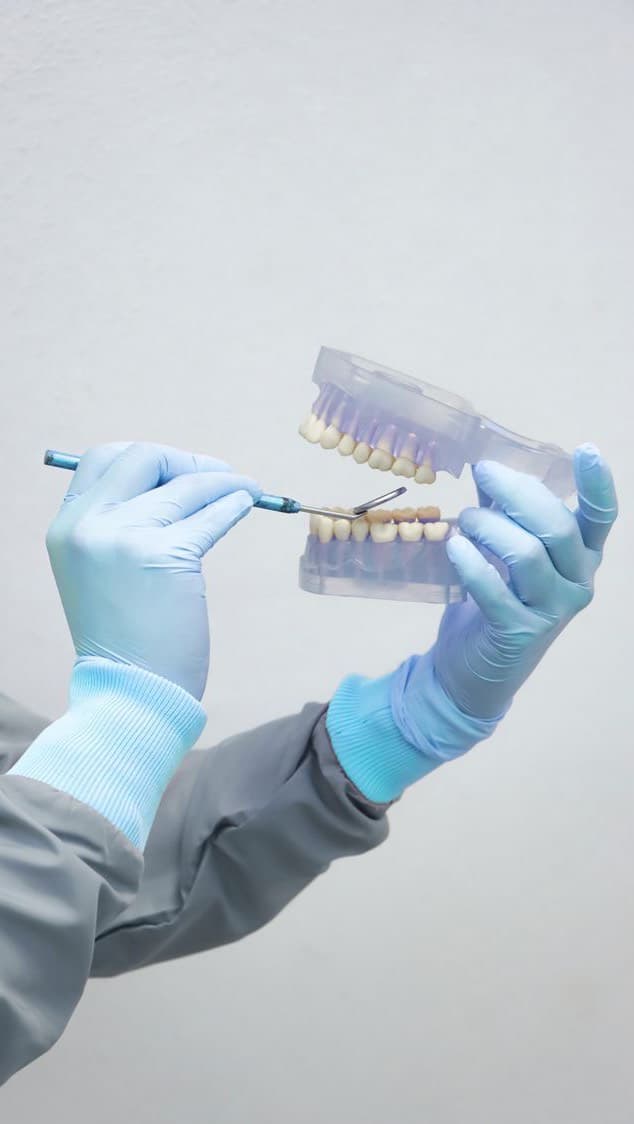
The dentist assesses redness, swelling, bleeding, the position of your gums and any loose teeth. A thin periodontal probe measures the depth of the space between a tooth and its gum, helping identify periodontal pockets. X-rays may be needed to assess the bone around the teeth. Investigations are chosen after examination rather than prescribed to everyone with a single symptom.
The next discussion covers cleaning, your home-care technique and further steps. Sometimes plaque control and professional cleaning are sufficient; sometimes periodontal treatment is needed. Ask the dentist to explain what has changed, what to do at home and when to return for reassessment.
When to seek help sooner
If your gums bleed regularly, or you have persistent bad breath or swelling, arrange an examination even if your teeth do not hurt. Very painful, swollen gums, a loose tooth or new gaps between teeth need earlier attention. Mention these signs when booking so the team can assess the urgency.
Swelling of the face or jaw together with severe pain or fever needs urgent dental care. If swelling is substantial, spreads towards the eye or neck, or makes it difficult to swallow, breathe or speak, seek emergency medical help immediately.
Frequently asked questions
Bleeding does not provide a ready-made diagnosis, but it can help you notice changes early. These are answers to three common questions about daily care.
Can I brush an area that bleeds?
Yes. Clean it gently with a soft toothbrush, without increasing pressure. If cleaning is very painful, see your dentist. For heavy bleeding or bleeding that does not stop promptly, contact a dentist or doctor urgently. Discuss regular bleeding with your dentist.
Will mouthwash alone help?
Mouthwash may be part of prescribed care, but it will not remove tartar or replace brushing and cleaning between the teeth. The choice depends on the condition of your gums; some medicated rinses have side effects.
My gums started bleeding after I began flossing. Is this normal?
A small amount of bleeding can happen when you start this routine. Be gentle and check your technique. If bleeding keeps returning, does not improve or concerns you, arrange an examination rather than attributing everything to the new floss.
